Guides
Transfers between London airports: Heathrow, Gatwick, Stansted, Luton, City and Southend
Six airports carry London's name, and a self-made connection, a diversion or a rebooked flight can mean crossing between any two of them. Here are all 15 pairings by road, the public transport the airports themselves describe, and a way to work out the time you need.
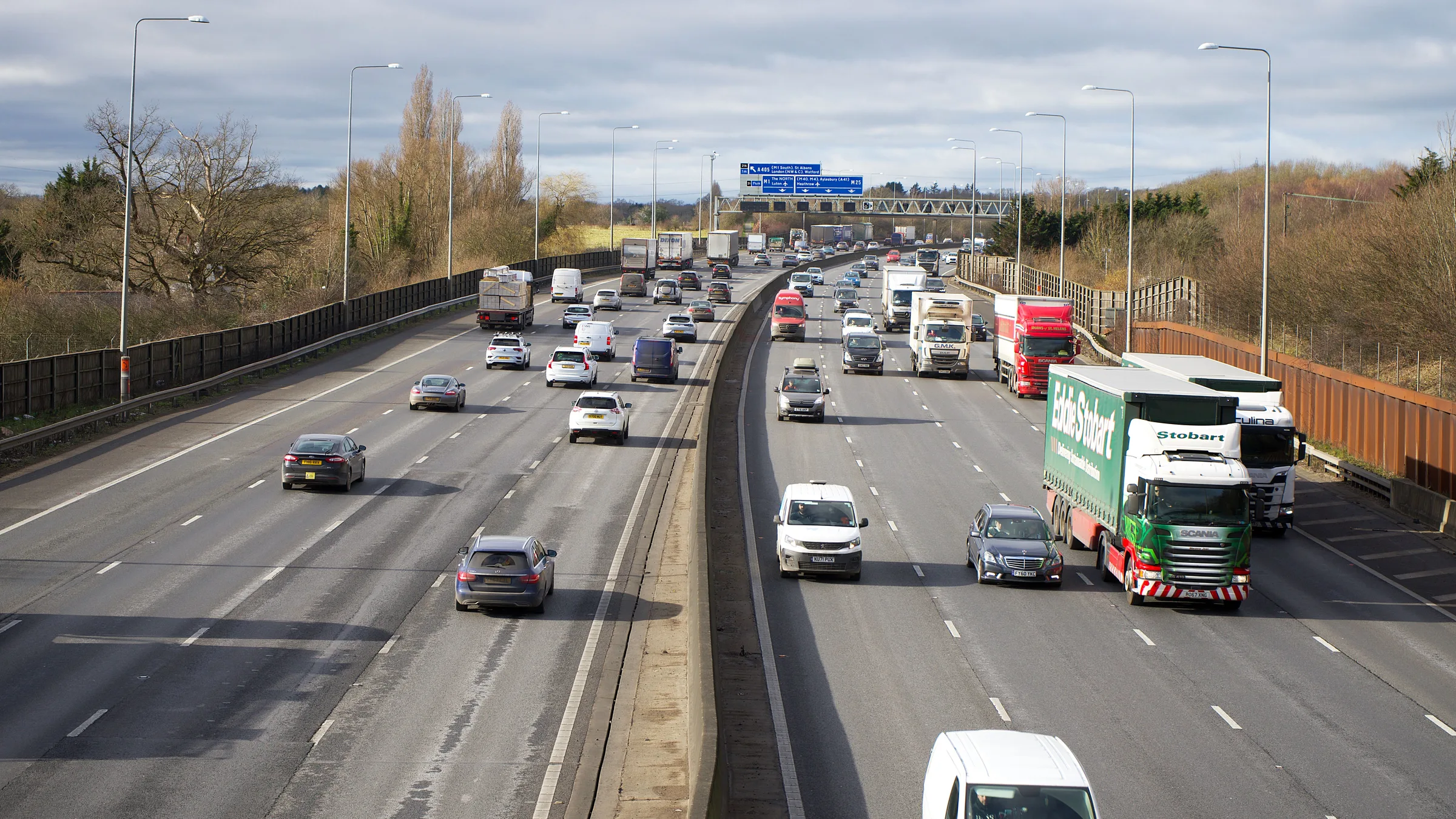
Moving between London airports is not a connection in the airline sense. You leave the first airport as an arriving passenger, with your bags, and reach the second as a departing one who checks in and clears security from scratch. Heathrow puts it plainly: on two separate bookings you are not technically a connecting passenger, and no minimum connection time applies.
The drive is the easy part to plan, because it is the one stage with a known length. The margin around it is where the planning goes.
Why people end up changing London airports
The usual reason is a self-transfer: a long-haul ticket into Heathrow or Gatwick and a separate short-haul ticket out of Stansted, Luton, London City or Southend, because that pairing suited the dates or the price. Neither airline's connection rules cover the gap between the two, so the timings are yours to get right.
The other two reasons are not planned. A flight can be diverted to a different London airport from the one on the ticket, leaving its passengers, and whoever was meeting them, in the wrong place. And a missed connection is sometimes rebooked from another airport, which turns a wait in a lounge into a cross-London journey with luggage.
All 15 London airport-to-airport pairings by road
The table lists every pairing of the six airports, shortest first, with the clear-road drive time and distance; each row links to the page that prices the journey in both directions. The quickest are Heathrow and Luton and Heathrow and Gatwick, both under an hour on a clear run, with London City and Southend close behind. The longest, Gatwick and Stansted, is about an hour and three-quarters, because the two lie on opposite sides of London.
Clear-road times are the floor, not the forecast. Several of these pairings use the M25 for much of the way, and traffic on it can add a great deal. When you choose a pick-up time, work backwards from the departure: the second airline's bag-drop deadline, minus a margin for traffic, minus the drive.
Clear-road times, the same in either direction. The busiest pairs have a page for each direction; the rest have one page covering both.
How long to allow, from landing to check-in
Work it out in stages. After landing come leaving the aircraft, passport control if you have flown in from abroad, and baggage reclaim, none of which comes with a promised time. Then the drive from the table, plus traffic. Then the second airline's bag-drop or check-in deadline, and security after that.
The airports add their own limits. Luton suggests timing a car to reach the airport two to three hours before the flight departs. London City is not open around the clock: its published hours are 4:45 to 22:00 on weekdays, 4:45 to 13:00 on Saturdays and 10:30 to 22:00 on Sundays, passengers may not stay outside them, and it asks you to arrive no more than two hours before your flight. Southend's terminal is not open 24 hours either; it opens three hours before the first departure. An overnight gap between an evening arrival and a morning flight from either of those two has to be spent somewhere other than the terminal.
Put the stages together and a change between, say, Heathrow and Stansted, about an hour and a half by road on a clear run, is measured in hours rather than minutes once the border, the bags and Stansted's check-in are added.
Trains and coaches between the London airports
Heathrow is clear that it has no direct trains to Gatwick, Stansted, Luton or London City: each rail journey changes in central London, and the routes to London City end on the DLR after two or more changes. What Heathrow does list is direct National Express coaches to Gatwick, Stansted and Luton throughout the day. Heathrow and Gatwick give different journey times for the coach between them, so check the operator's timetable rather than either airport's figure.
Some pairings are easier by rail. Thameslink runs direct from Gatwick to Luton Airport Parkway, where the Luton DART, open 24 hours, takes four minutes to the terminal, which makes Gatwick and Luton the simplest change without a car. Stansted lists coaches to Heathrow, Gatwick and Luton among its National Express routes. Southend and Stansted are linked by the X30 bus via Chelmsford, but only its early-morning and late-evening journeys stop outside Southend's terminal. London City connects to the rest of London by the DLR, which joins the Elizabeth line, the Overground and the Underground.
Public transport suits one traveller with a small bag and time in hand. It suits a family with hold luggage much less, and it is no help before the first train or after the last coach. Those are the journeys where a car between Stansted and Southend, Stansted and Luton or Heathrow and London City earns its place.
Diversions and missed connections
If your flight is diverted to another London airport, or you are rebooked from a different one, call the number on your booking confirmation as soon as you know. Flight tracking follows the landing time, but a transfer booked from Gatwick is a journey from Gatwick: a landing at Stansted is a different route with a different price, so the booking has to be rearranged rather than simply redirected.
For a missed connection where the new flight leaves from another airport, the airport-to-airport page for that pairing, such as Heathrow and Southend or Gatwick and London City, gives the price for the drive before you book. Book it with the new departure time, and leave the margin described above.
What to tell us when you book: both flights
Give the arriving flight number and the departing flight number with its time. The first lets the driver follow your landing and wait for you, with the first 60 minutes after touchdown free of waiting charges. The second lets you and the driver check the plan against the drive and the check-in deadline at the other end, and at Heathrow and Gatwick it also decides which terminal the car heads for.
Then the luggage. On a self-transfer everything you packed is with you, and the number of large cases decides the vehicle class more often than the number of people does. If you would like the driver to wait in arrivals holding your name, add a name board when you book.
What to take from this
- Changing London airports on separate tickets means arriving, collecting bags and checking in again, with no minimum connection time to protect you.
- Heathrow–Luton and Heathrow–Gatwick are under an hour on clear roads; Gatwick–Stansted is the longest pairing at about an hour and three-quarters.
- London City and Southend are not open 24 hours, so an overnight gap cannot be spent in their terminals.
- Heathrow has no direct train to any other London airport; Gatwick to Luton by Thameslink is the easiest change by rail.
- Give both flight numbers when you book, and plan backwards from the second airline's bag-drop deadline.
FAQ
Questions this raises
How long is the transfer from Heathrow to Gatwick?
About 55 minutes and 46 miles on clear roads. Allow more at busy times on the M25, and add the time to collect bags at Heathrow and to check in at Gatwick.
Is there a direct train from Heathrow to Gatwick?
No. Heathrow says there are no direct trains between the two; rail journeys change in central London. National Express runs direct coaches between them throughout the day.
How long does it take to get from Heathrow to Luton Airport?
About 50 minutes on clear roads, a little under 40 miles. It is the shortest of the 15 pairings between London airports.
How much time should I leave between flights at different London airports?
There is no official figure, because separate tickets carry no minimum connection time. Add up the stages: leaving the aircraft, passport control, baggage reclaim, the drive with a margin for traffic, and the second airline's bag-drop deadline. For the longer pairings that comes to hours rather than minutes.
Can I wait overnight at London City Airport for a morning flight?
No. London City is not open 24 hours and does not let passengers stay outside its opening hours. Southend's terminal is not open 24 hours either.
What should I do if my flight is diverted to a different London airport?
Call the number on your booking confirmation as soon as you know where you have landed. A landing at another airport is a different journey with its own price, so the transfer has to be rearranged.
Read next
- UK airport drop-off and pick-up charges: all 29 airports compared Most UK airports now charge for the minutes it takes to unload a car near the terminal, and several will not let anyone collect a passenger at the kerb. Here are all 29 airports this site serves, side by side, with the free alternatives each one publishes.
- London's Six Airports Compared: Which Is Nearest to Where You Are Going? Heathrow, Gatwick, Stansted, Luton, London City and Southend sit on every side of the capital, and the nearest one changes with the postcode. Here they are side by side: drive times to central London and the home counties, how each handles pick-ups, and when the train is quicker.
- London Airports to Central London: Train, Tube, Coach or Private Car? Every London airport has a fast public transport link into the city, and for a lot of trips it is the right answer. Here is each one side by side with a private car: journey time, how often it runs, and when the car is the better buy.